
This post may contain affiliate links. Please see disclosure policy here.

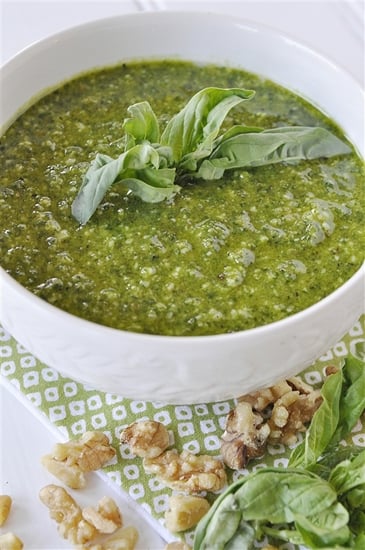
Learn how to make easy homemade basil pesto recipe with fresh basil, walnuts, Parmesan cheese, and olive oil. This flavorful pesto recipe comes together in minutes and is perfect for pasta, sandwiches, pizza, and more.
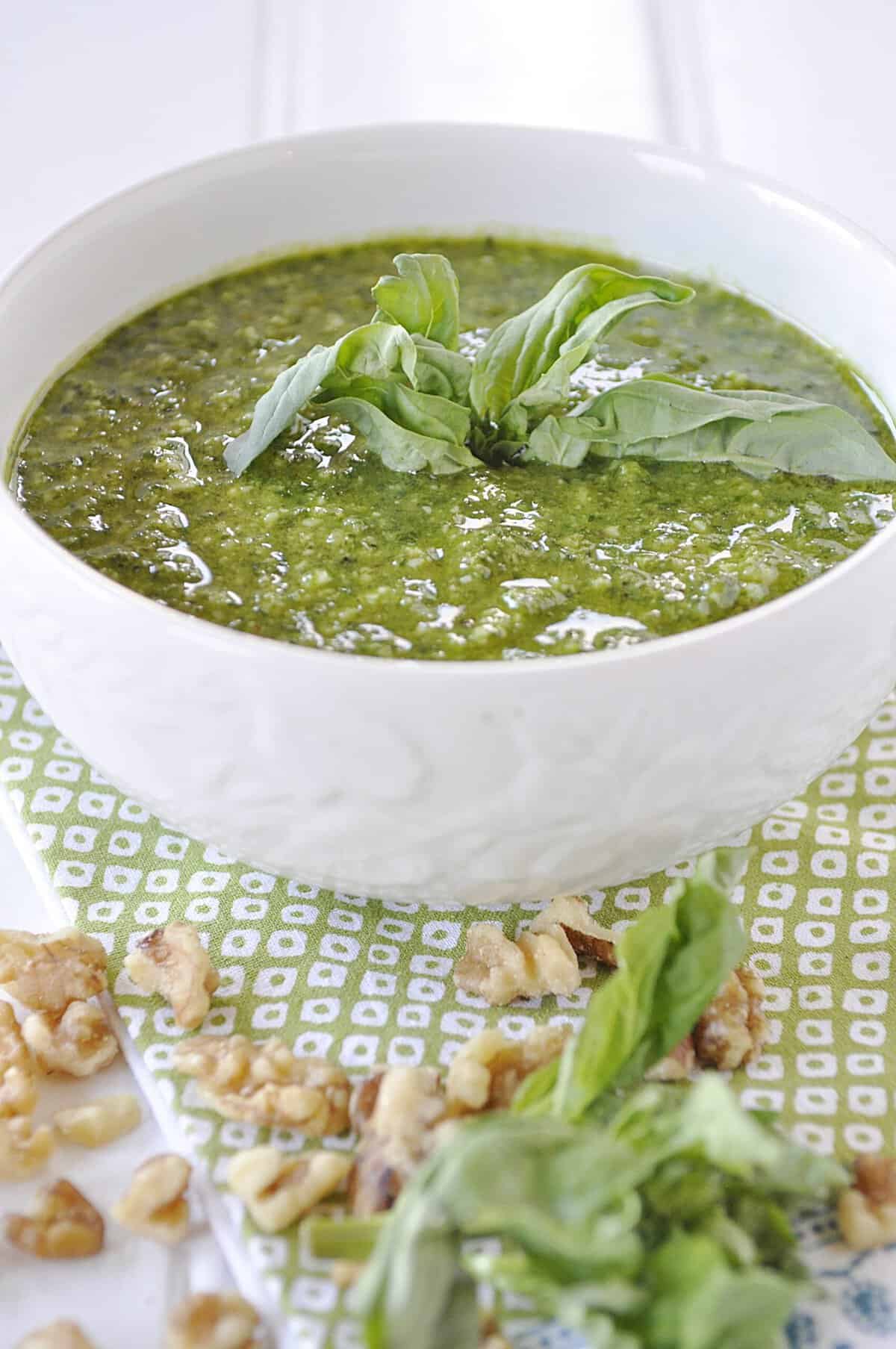
Why You’ll Love This Recipe
There’s something special about cooking with fresh herbs. A few years ago, I spent time in France and stayed in a beautiful 13th-century château. My room overlooked the kitchen garden, tucked just outside the kitchen door. I loved watching the cooks step outside, snip a handful of fresh herbs, and bring them straight into the kitchen. It reminded me that the simplest ingredients are often the most flavorful.
That’s exactly why I love making homemade pesto. Every summer my basil plants seem to grow faster than I can use them, and turning that fragrant basil into pesto is one of my favorite ways to preserve those fresh garden flavors.
This pesto is bright, fresh, and incredibly versatile. Toss it with pasta, spread it on sandwiches, drizzle it over grilled chicken, or use it as a dip for vegetables and bread. It instantly adds flavor to just about anything.
While traditional pesto is made with pine nuts, I prefer using walnuts. Not only do I love their rich, slightly earthy flavor, but they’re much more budget-friendly than pine nuts. That means you can enjoy homemade pesto more often without spending a fortune—a definite win-win!
Best of all, this recipe comes together in just minutes with a handful of simple ingredients, making it an easy way to bring a little garden-fresh flavor to your table any time of year.
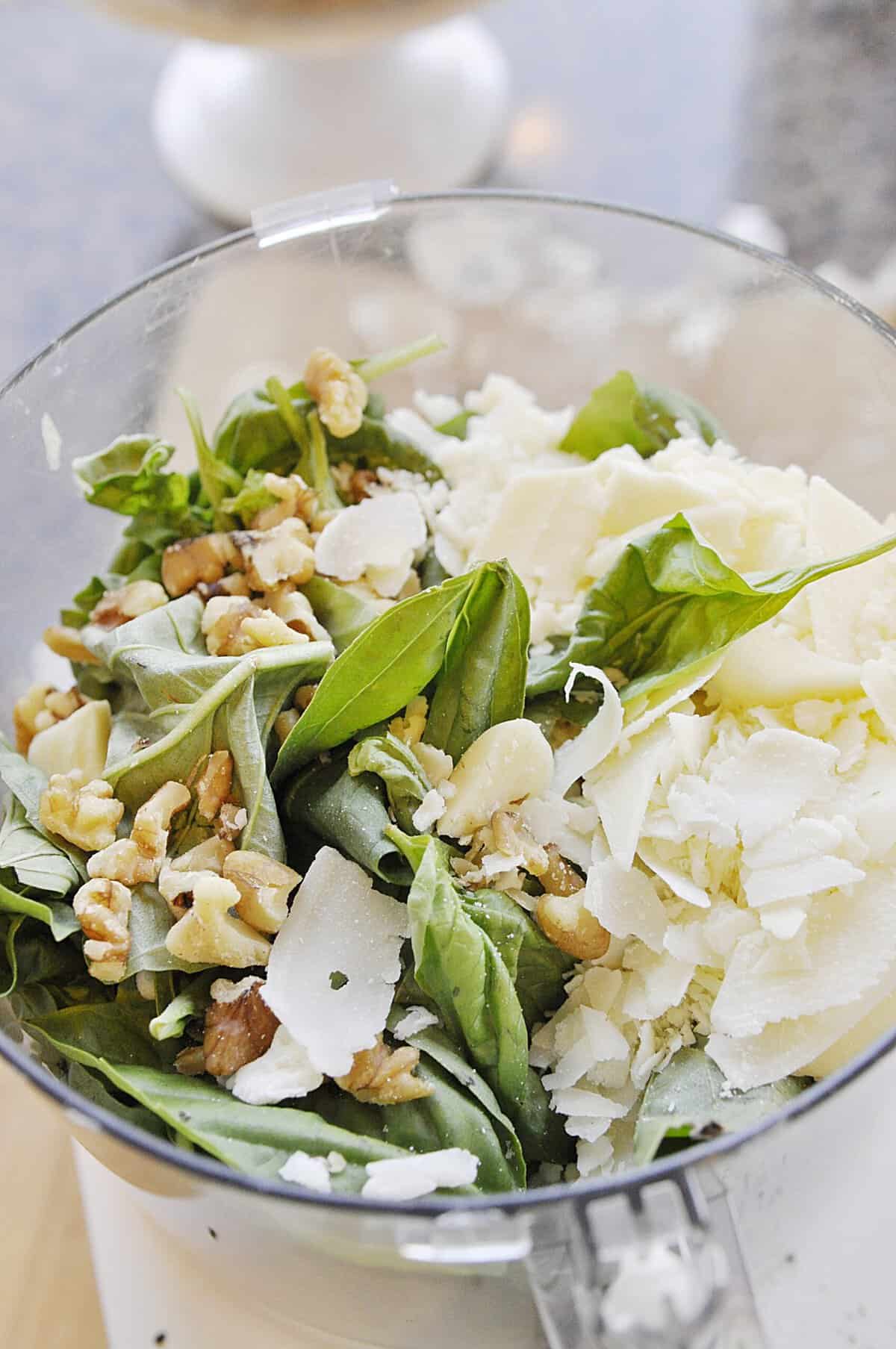
Ingredients Needed
- Fresh Basil
- Walnuts or you can use pine nuts
- Olive Oil
- Parmesan Cheese
- Salt
- Pepper, freshly ground
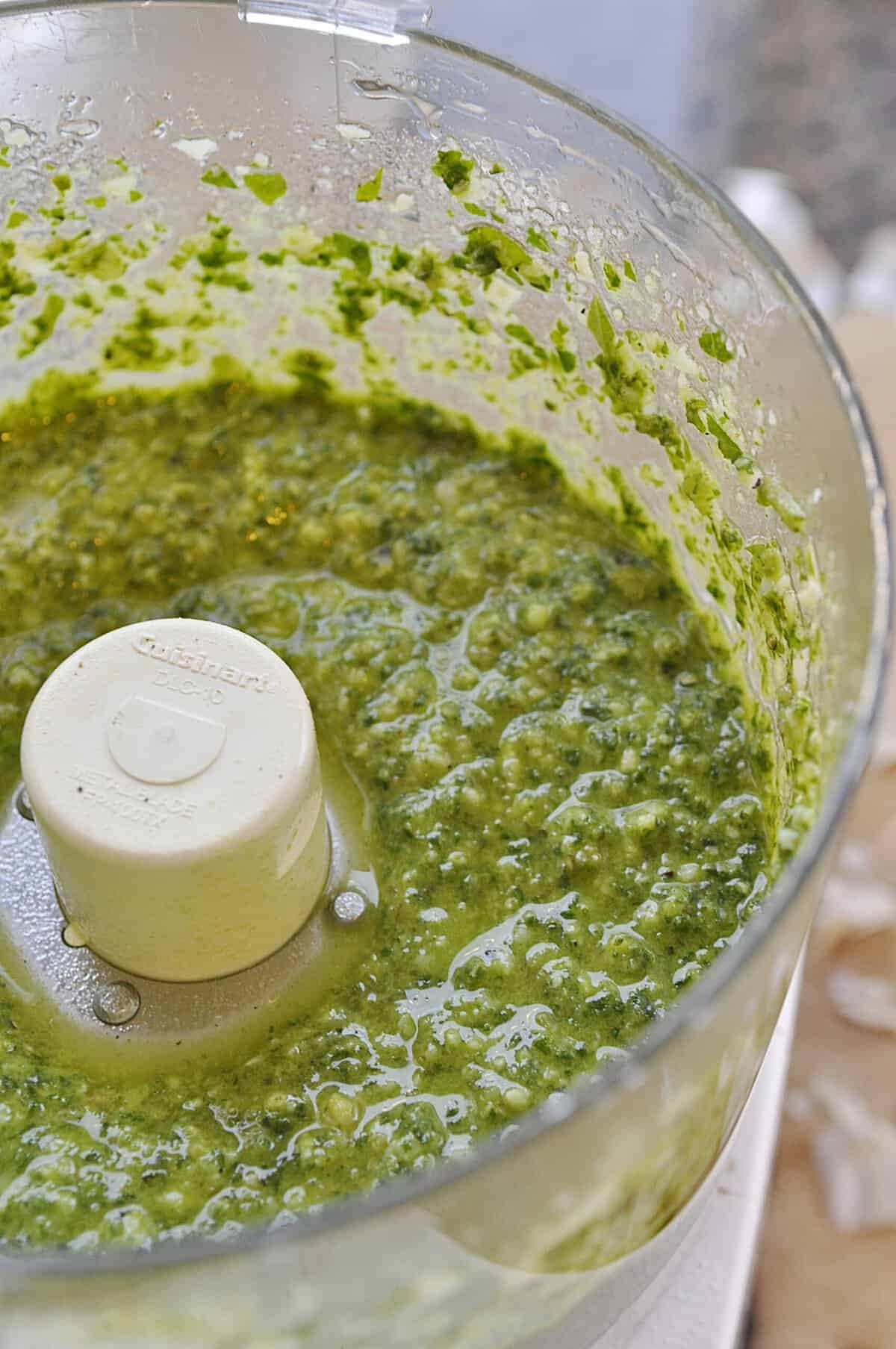
How to Make Pesto
- Remove basil leaves from stems.
- Combine basil leaves, walnuts, Parmesan, salt and pepper in a blender of food prossesor.
- Pulse on high until smooth.
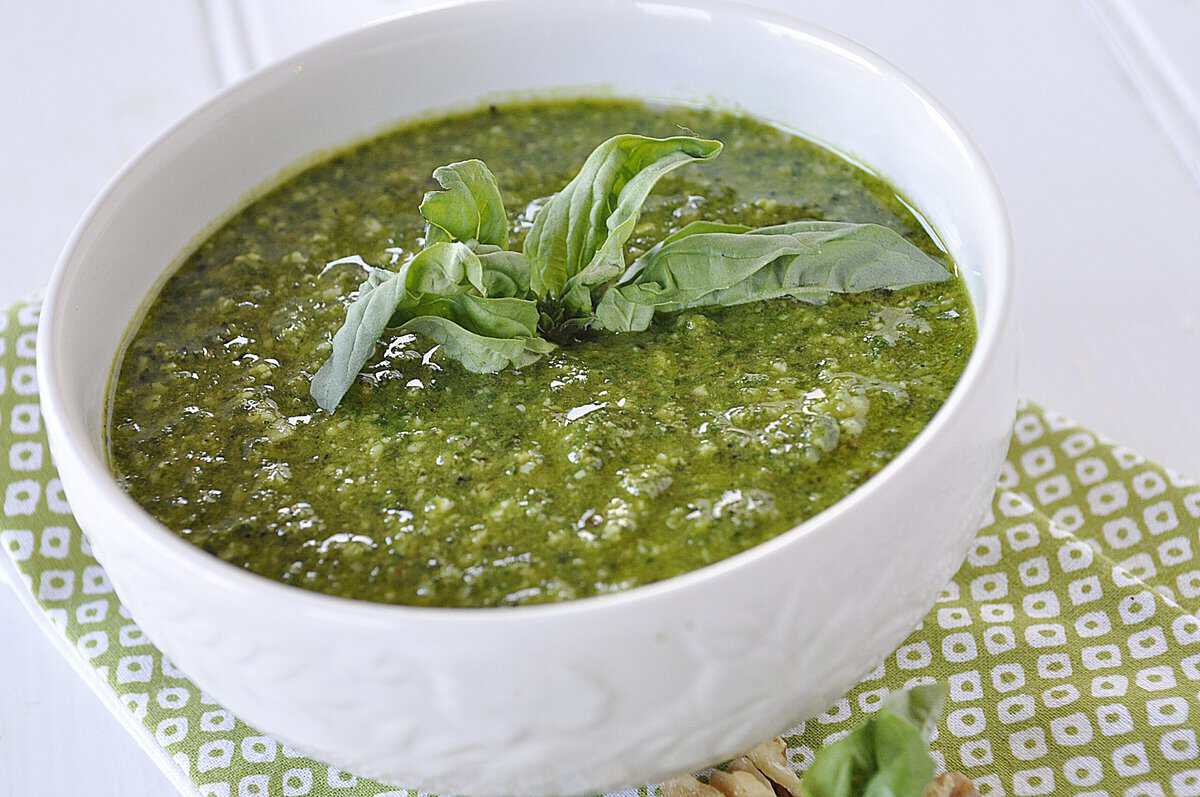
- Add in olive oil in a slow pour and pulse until the pesto is the right consistency. Pesto should run off spatula.
Tips from leigh Anne
- Use Fresh Basil – Fresh, vibrant basil is the key to great pesto. Avoid basil leaves that are wilted, bruised, or yellowing, as they can affect both the flavor and color of your pesto.
- Toast the Walnuts – For even more flavor, lightly toast the walnuts in a dry skillet for 3-5 minutes before adding them to the food processor. Let them cool completely before using.
- Pulse, Don’t Puree – Use short pulses rather than running the food processor continuously. This helps maintain a little texture and prevents the basil from becoming overly bruised.
- Add the Olive Oil Slowly – With the food processor running, drizzle the olive oil in slowly. This helps create a smooth, creamy pesto that emulsifies beautifully.
- Scrape Down the Sides – Stop the food processor once or twice and scrape down the sides of the bowl to ensure everything is evenly incorporated.
- Adjust the Consistency – If your pesto seems too thick, add a little extra olive oil until it reaches your desired consistency. For pasta, you can also thin it with a spoonful of warm pasta water.
- Prevent Browning – A thin layer of olive oil on top of stored pesto helps keep it bright green and prevents oxidation. Press plastic wrap directly onto the surface before putting in the fridge for extra protection.
- Make Extra and Freeze – Pesto freezes beautifully. Spoon it into ice cube trays, freeze, and transfer the cubes to a freezer bag. You’ll have perfectly portioned pesto ready whenever you need it.
- Taste Before Serving – Diffferent brands of Parmesan and varying sizes of basil leaves can affect the flavor. Give your pesto a taste and adjust the salt, cheese, or lemon juice if needed before serving.
Frequently Asked Questions
Can I use pine nuts instead of walnuts?
Absolutely! Walnuts are my preferred choice but pine nuts work great. They are more expensive. You could also use pistachios or almonds.
How long does pesto last?
Store pesto in an airtight container in the refrigerator for up to 5 days. To keep it fresh and green, pour a thin layer of olive oil over the top before refrigerating.
Do I need to wash basil before making pesto?
Yes. Rinse the basil gently and dry it thoroughly before using. Excess moisture can dilute the flavor and affect the texture of the pesto.
Can I make pesto without a food processor?
You can. A blender works well, though you may need to stop and scrape down the sides more often. Traditionally, pesto was made using a mortar and pestle.
Why did my pesto turn brown?
Basil oxidizes when exposed to air, causing it to darken. This doesn’t affect the flavor, but you can slow browning by covering the surface with a layer of olive oil and storing it in an airtight container.
Can I use other herbs than basil?
Definitely. While basil is traditional, you can substitute or combine it with parsley, spinach, arugula, cilantro, or even mint for different flavor variations.
There’s a reason pesto has remained a favorite for generations—it transforms a handful of simple ingredients into something truly special. Whether you’re harvesting basil from your own garden, picking up a bunch at the farmer’s market, or just looking for a quick way to add big flavor to a meal, this homemade pesto is the answer. Fresh, vibrant, and ready in minutes, it’s a delicious reminder that some of the best recipes are also the simplest. Be sure to make an extra batch to freeze—you’ll be glad to have a taste of summer waiting for you all year long!
Use this recipe to make:
Be sure and follow me over on YouTube for weekly cooking demos.
Pesto Recipe
Ingredients
- 2 cups fresh basil leaves removed from steams
- 1/2 tsp freshly ground pepper
- 1/2 cup walnuts
- 1.5 cup olive oil
- 1/2 cup grated Parmesan cheese
- 1/2 tsp salt
Instructions
- Combine all ingredients in blender except olive oil and blend on high until smooth.
- Add in olive oil until the pesto is the right consistency. Should run off spatula.
- It if is too thick add some extra olive oil.
Tips & Notes:
- Use Fresh Basil Fresh, vibrant basil is the key to great pesto. Avoid basil leaves that are wilted, bruised, or yellowing, as they can affect both the flavor and color of your pesto.
- Toast the Walnuts For even more flavor, lightly toast the walnuts in a dry skillet for 3-5 minutes before adding them to the food processor. Let them cool completely before using.
- Pulse, Don’t Puree Use short pulses rather than running the food processor continuously. This helps maintain a little texture and prevents the basil from becoming overly bruised.
- Add the Olive Oil Slowly With the food processor running, drizzle the olive oil in slowly. This helps create a smooth, creamy pesto that emulsifies beautifully.
- Scrape Down the Sides Stop the food processor once or twice and scrape down the sides of the bowl to ensure everything is evenly incorporated.
- Adjust the Consistency If your pesto seems too thick, add a little extra olive oil until it reaches your desired consistency. For pasta, you can also thin it with a spoonful of warm pasta water.
- Prevent Browning A thin layer of olive oil on top of stored pesto helps keep it bright green and prevents oxidation. Press plastic wrap directly onto the surface before refrigerating for extra protection.
- Make Extra and Freeze It Pesto freezes beautifully. Spoon it into ice cube trays, freeze, and transfer the cubes to a freezer bag. You’ll have perfectly portioned pesto ready whenever you need it.
- Taste Before Serving Different brands of Parmesan and varying sizes of basil leaves can affect the flavor. Give your pesto a taste and adjust the salt, cheese, or lemon juice if needed before serving.
Recommended Products
Nutrition Facts:
Barbara says
Mine turned out great.